
AI Adoption in the Workplace: A Strategic Shift Toward Productivity and Workforce Evolution
Explore how AI adoption is reshaping the modern workplace, delivering productivity gains while shifting workforce dynamics. Learn how strategic investment and training are key to success.
The Challenge: Productivity Paradox and Workforce Realignment
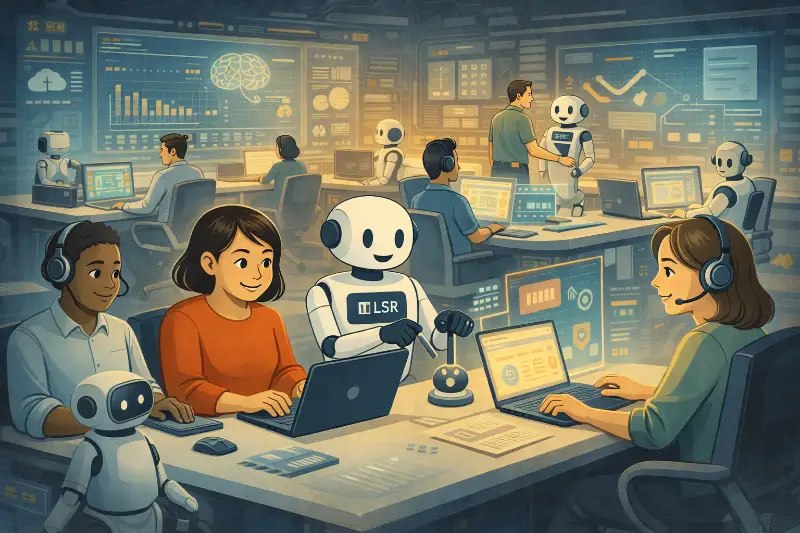
As organizations across industries embrace artificial intelligence (AI), a complex picture emerges. While AI adoption is rapidly accelerating, companies are grappling with a productivity paradox—measurable gains are modest, and the full impact on employment remains unclear. Despite significant investment in AI, many businesses are not seeing immediate or dramatic shifts in workforce size or cost. However, there is a clear trend: AI is reshaping the nature of work, with a shift from routine clerical roles to more skilled technical positions.
The Solution: Strategic AI Investment and Workforce Optimization
Organizations are responding to this challenge by strategically investing in AI not just for cost reduction, but for enhancing productivity and labor efficiency. The 2025 research shows that over 80% of companies planned to invest in AI in 2026, with large firms leading the charge. These investments are focused on scaling AI infrastructure, including "AI factories" and "AI at the edge," and deploying AI tools across various departments.
Crucially, companies are recognizing the importance of workforce realignment. AI is being used to complement high-skilled analytical roles while substituting for routine tasks. This shift requires a focus on training, leadership support, and strategic tool adoption to ensure AI tools are effectively integrated into workflows.
Quantifiable Results: Measurable Gains and Strategic Outcomes
The data tells a compelling story:
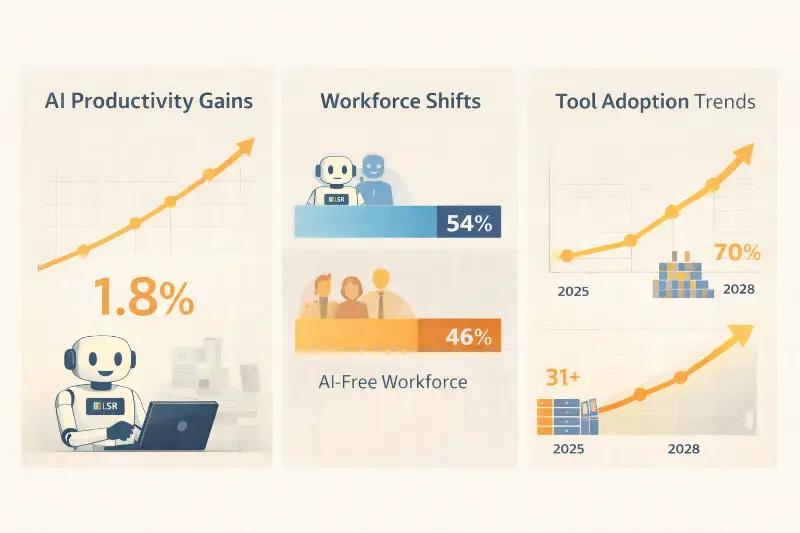
- Productivity Gains: Companies reported a 1.8% increase in productivity from AI usage in 2025, with high-skilled services like finance expected to see the most significant improvements.
- Workforce Dynamics: Large firms are more likely to reduce routine workers, while small firms are expanding technical employment.
- Tool Adoption: Nearly 70% of respondents expected to have 31 or more AI pilots by 2028, and tool sprawl is increasing, with an average of 7 AI tools per organization in 2025.
- Employee Engagement: Only half of frontline employees regularly use AI tools. However, those who receive at least five hours of training and have access to in-person coaching show significantly higher usage rates.
Strategic Benefits for Leaders and Organizations
For C-suite executives, product managers, and business owners, this data underscores the importance of:
- Strategic AI Investment: Aligning AI initiatives with productivity goals rather than cost-cutting.
- Workforce Reskilling: Investing in training to ensure all employees, especially frontline workers, can leverage AI effectively.
- Leadership Engagement: Ensuring leadership support is a key driver for AI adoption and usage.
- Balanced AI Integration: Finding the optimal balance where AI enhances rather than overwhelms workloads.
This approach not only improves productivity but also helps maintain employee engagement and reduces disengagement, which is rising despite lower burnout levels.
Looking Forward: Scaling AI and Enhancing Platform Resilience
As AI adoption continues to evolve, the next steps involve scaling AI infrastructure, improving platform resilience, and ensuring that AI tools are accessible and effective across all levels of the organization. The goal is to build a future where AI is seamlessly integrated into daily operations, enhancing human capabilities and driving sustainable growth.
Workforce Shift Percentiles: A Detailed Analysis
The research reveals significant workforce shift patterns that are reshaping organizational structures:
- Routine Job Reduction: Large companies are expected to reduce their share of routine workers by approximately 15-20% as AI automates clerical tasks
- Technical Role Expansion: Skilled technical positions are projected to grow by 25-30% across organizations, with finance and analytics leading the charge
- Skill Gap Bridging: Organizations are investing in reskilling programs, with 60% of companies reporting significant workforce retraining initiatives
- Geographic Distribution: The shift is most pronounced in urban centers where AI infrastructure is more developed, with 70% of large firms in metropolitan areas implementing major workforce realignment strategies
These shifts indicate that while AI adoption is accelerating, the workforce transformation is gradual and strategic, requiring careful planning and execution to maximize benefits while minimizing disruption.
Conclusion: The Path Forward Is Clear
The journey toward AI maturity is not without its challenges, but the evidence suggests that organizations that strategically invest in AI, support their workforce, and align their tools with productivity goals are well-positioned for long-term success. As we continue to refine our AI strategies, the focus must remain on continuous improvement and platform resilience to fully harness the potential of artificial intelligence in the modern workplace.
Are you Ready?
Ready to transform your ideas into reality?
Join the successful organisations using Libertas Software Research to build and design powerful software solutions to meet their needs.
Clients




Latest Knowledge Hub Articles
Latest Knowledge Hub Articles
5 min read
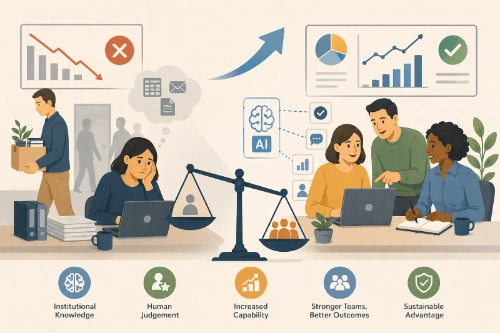
Organisations using AI to cut headcount are making a short-term trade with long-term consequences. The ones holding their teams together and investing in how those teams operate with AI are building something more durable.
21 May 2026
Read More
3 min read
A year on from incorporation, Libertas Software Research has moved from blank page to real clients, real products, and work worth marking.
17 May 2026
Read More
6 min read
Multi Agency Incident Management Systems have moved from optional to essential. Explore why traditional approaches fall short and how modern platforms are closing the gap between planning and execution.
24 Apr 2026
Read MoreNewsletter
Connect on LinkedIn